Gazeta Wyborcza (english edition)


While Russian forces continue to advance in parts of Ukraine's eastern Donetsk region, their glacial pace—combined with pushback elsewhere on the front line—threatens to weaken the Kremlin's position in any future peace talks, according to analysts. President Vladimir Putin has insisted that the war cannot end unless Russia controls all of Donbas, which comprises the Ukrainian regions of Donetsk and Luhansk. Ukrainian forces currently hold approximately one-fifth of Donetsk.
"In the broader picture, if the Russians cannot find ways to significantly increase momentum, the goal of capturing Donbas this year is slipping rapidly out of their reach," said John Helin, analyst and co-founder of the Black Bird Group, a Finnish conflict-analysis team.
According to the Black Bird Group's latest data, shared with Reuters, Russian forces captured 82 square kilometers of Ukrainian territory in May, compared to 94 square kilometers in April and 25 square kilometers in March. This stands in stark contrast to the much larger gains made over the same period last year, when Moscow's troops captured 538 square kilometers, 226 square kilometers, and 185 square kilometers, respectively.
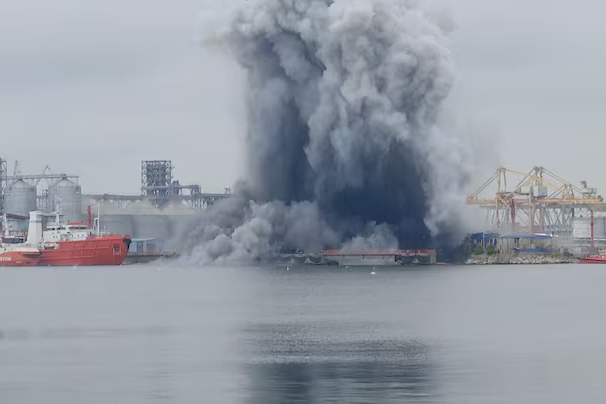
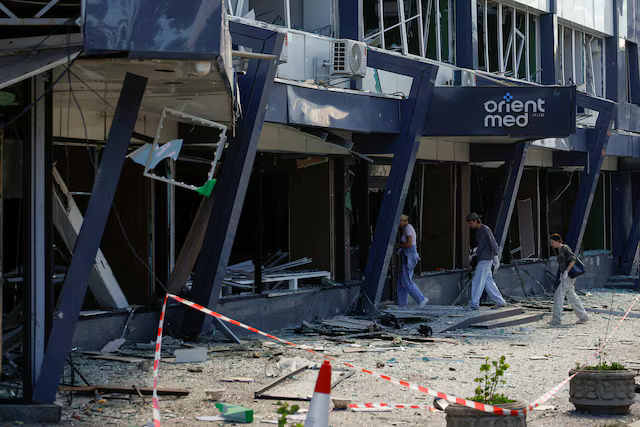
The Institute for the Study of War (ISW), a Washington-based think tank, stated that a series of escalating Russian strikes on Kyiv and other cities in recent weeks has been aimed partly at distracting from Moscow's battlefield difficulties and the impact of Ukraine's long-range attacks inside Russia. On Wednesday, Ukrainian drones struck an oil export terminal in St. Petersburg, hours before a major annual economic forum began in the city, in a bid to embarrass the Kremlin.
"Putin is using massive strike packages against Kyiv in an effort to break Ukraine's will to fight as well as to disguise his weakness," the ISW said in an assessment on Tuesday, following the attack on Kyiv and Dnipro, a southeastern industrial hub. It was the third heavy assault on the Ukrainian capital within a month.
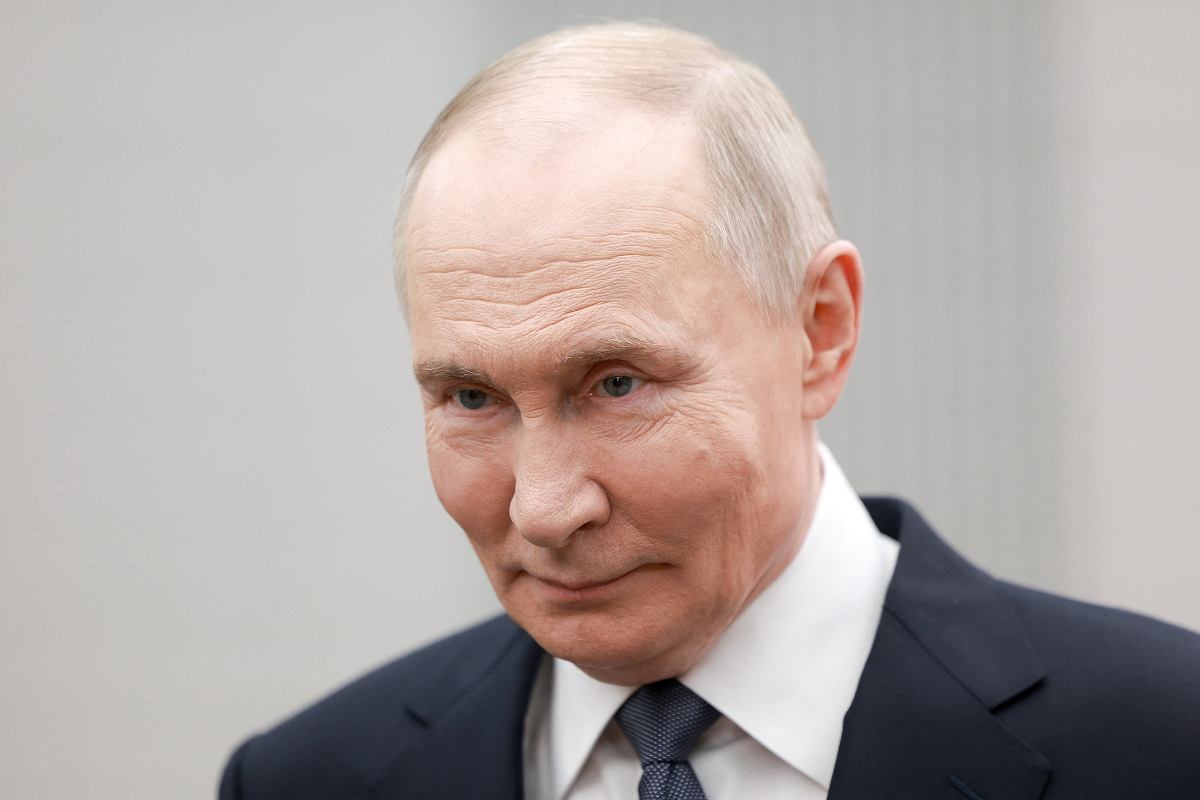
Russia's defense ministry did not respond to a request for comment. Putin has stated that his forces are advancing on the battlefield and could soon conclude the war. The Kremlin stated on Wednesday that it would continue striking Ukraine "systematically" in response to attacks such as those on St. Petersburg.
Slow Pace of Gains
The Kremlin's spring offensive has primarily targeted Ukraine's so-called "fortress belt" of strategic cities in Donbas, extending from Slovyansk and Kramatorsk in the north to Kostiantynivka in the south. Kyiv has firmly refused to cede the remaining portions of Donbas that Russia has been unable to capture over four years of conflict. Analysts indicate that Moscow's decelerated rate of advance is diminishing its leverage.
A "kill zone" infested with drones spans the 1,200-kilometer front line, where territory is fiercely contested and control is tenuous, making the assessment of losses and advances challenging. The front line frequently manifests as a "grey zone," characterized by small pockets of troops from both sides intermingled across several kilometers.
Earlier this week, the Ukrainian open-source group DeepState reported that Russian troops achieved their smallest monthly territorial gains in May since October 2023—totaling 14 square kilometers—despite a 37.5% increase in assaults by Russian forces. The group further noted that the delay in Ukrainian advances suggests Kyiv's forces were likely to have recaptured more territory than Russia seized for the first time since a failed Ukrainian counteroffensive in 2023. DeepState's map indicates Ukraine made minor new gains in May around the village of Novoselivka, approximately 50 kilometers southwest of Pokrovsk, building upon earlier gains near the same area following a successful winter counterattack.
"The war is entering a new stage, and it is crucial for the Ukrainian state not to lose the initiative," the group stated on Monday.
Brigadier General Andriy Biletsky, a senior Ukrainian commander leading Ukraine's Third Army Corps, told Reuters last month that Ukraine possesses a six-month opportunity (https://www.reuters.com/business/aerospace-defense/senior-ukrainian-commander-sees-imminent-turning-point-war-2026-05-27/) to force Russia into a defensive position and strengthen its own standing for peace negotiations.
Mathieu Boulègue of the U.S.-based Center for European Policy Analysis stated that Moscow's war machine is also contending with shrinking industrial capacity due to Western sanctions, as well as dwindling stocks of nearly all weaponry. "They are really slowly, I think, changing the cost-benefit calculus of the Kremlin," he remarked regarding Russia's appetite for continuing the war.